

Hot Soup Summer
Devouring gulyás, deep-fried lángos and other Hungarian delights at what may be Chicagoland's best festival

Driving down a residential stretch of West Foster Avenue in suburban Norridge, it’s easy to overlook the United Church of Christ; there’s no steeple or towering cross indicating a house of worship. The only differentiator between the quintessential mid-century ranch that stands at 8260 and the neighboring homes is an impressive wood gate hand-carved with ornamental patterns and inscribed with the words “Welcome” and its Hungarian counterpart “Isten Hozott.”
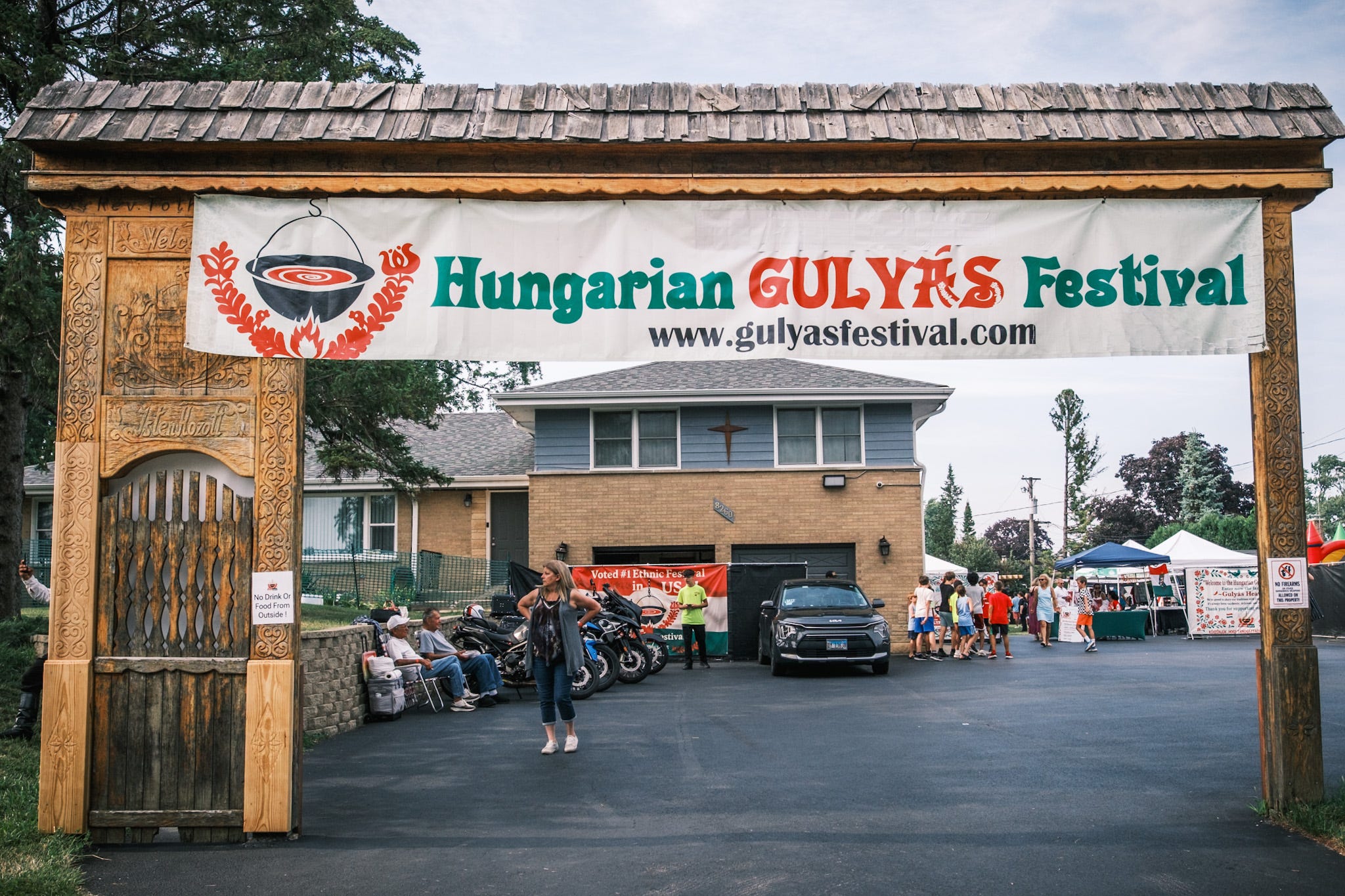
We knew we were in the right place as soon as we stepped out of our car. Hit with an aroma of smoke, vaporized paprika and caramelized cinnamon-sugar, with a rousing backing-track of Central European folk music filling the air, we had arrived at Gulyás Festival.
After paying the $35 admission fee for all-you-can-eat gulyás (aka goulash), we entered into a backyard barbecue on steroids.


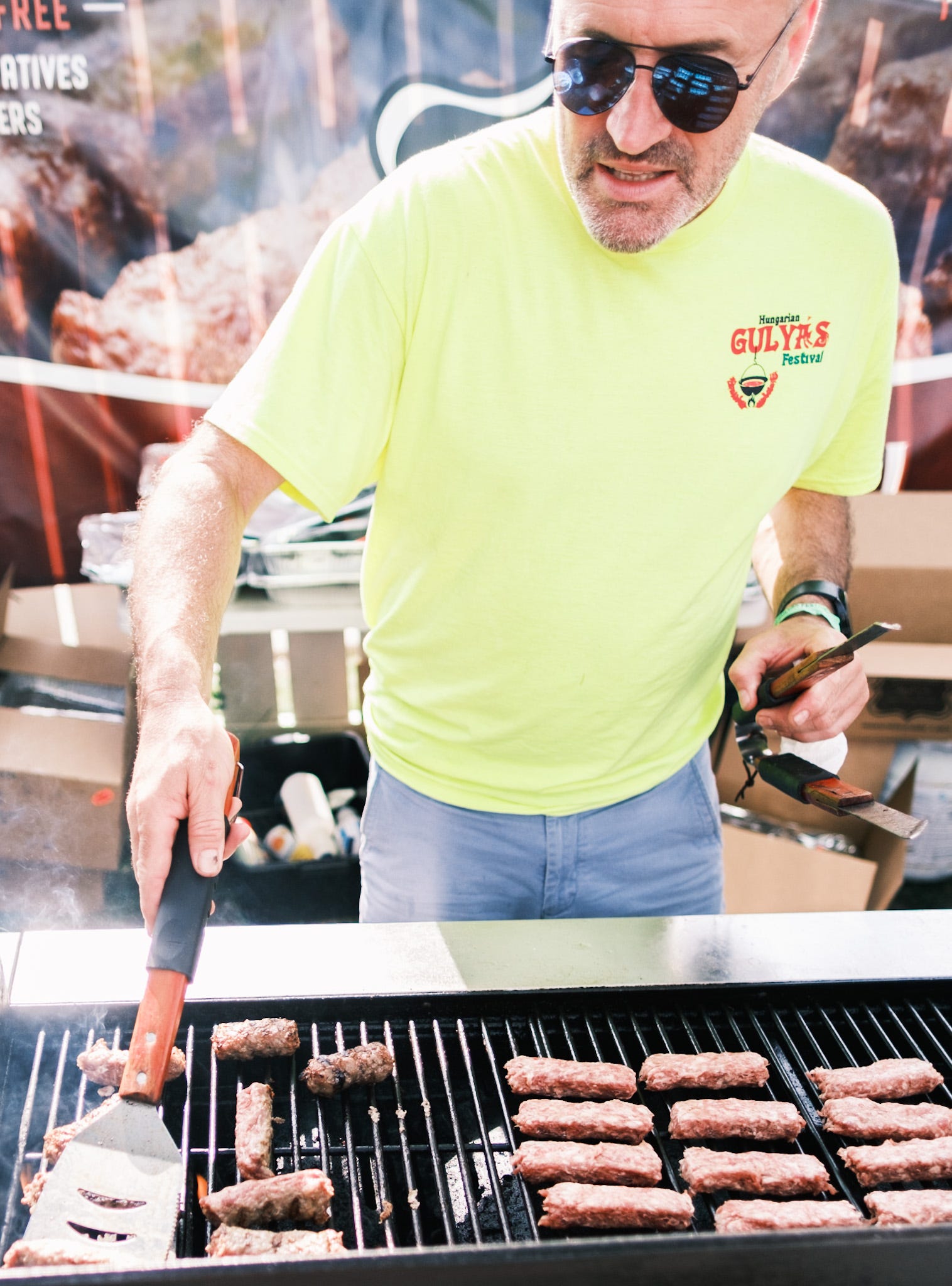
Straight ahead: a massive grill lined with rows of sizzling sausages. To our left: a cheerful assembly line coiling dough around wood spindles and roasting butter-basted cakes over hot coals. On the right: numerous cast-iron cauldrons known as bogrács, each suspended from a tripod over an open fire, bearing the fest’s namesake gulyás.
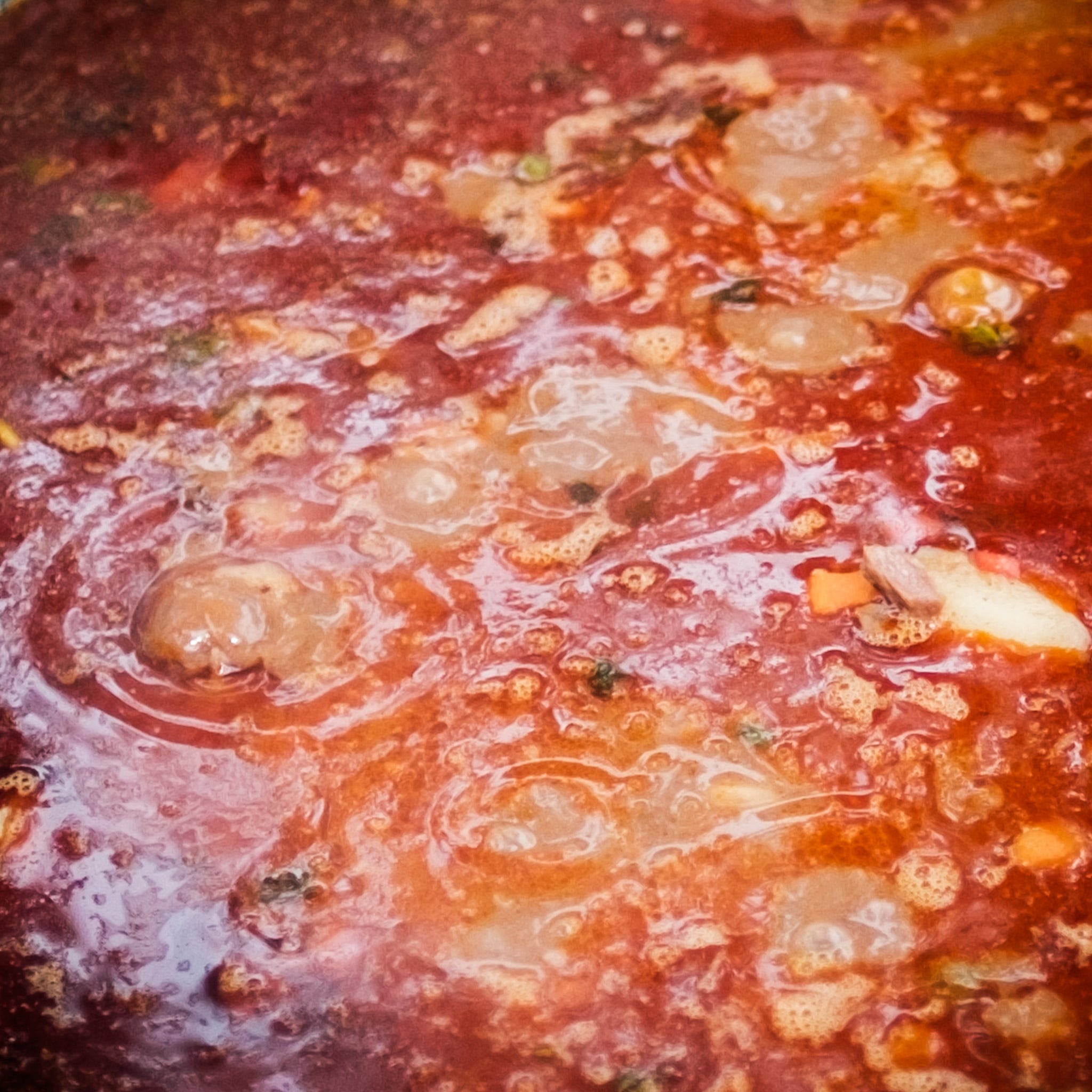
BB and I could not believe our eyes. Peering into the bubbling vats of paprika-slicked stew felt like staring at the violent churn of the earth’s molten core. The electric orange elixir, burping chili-laced animal fat studded with hunks of meat and potatoes, was primordial.
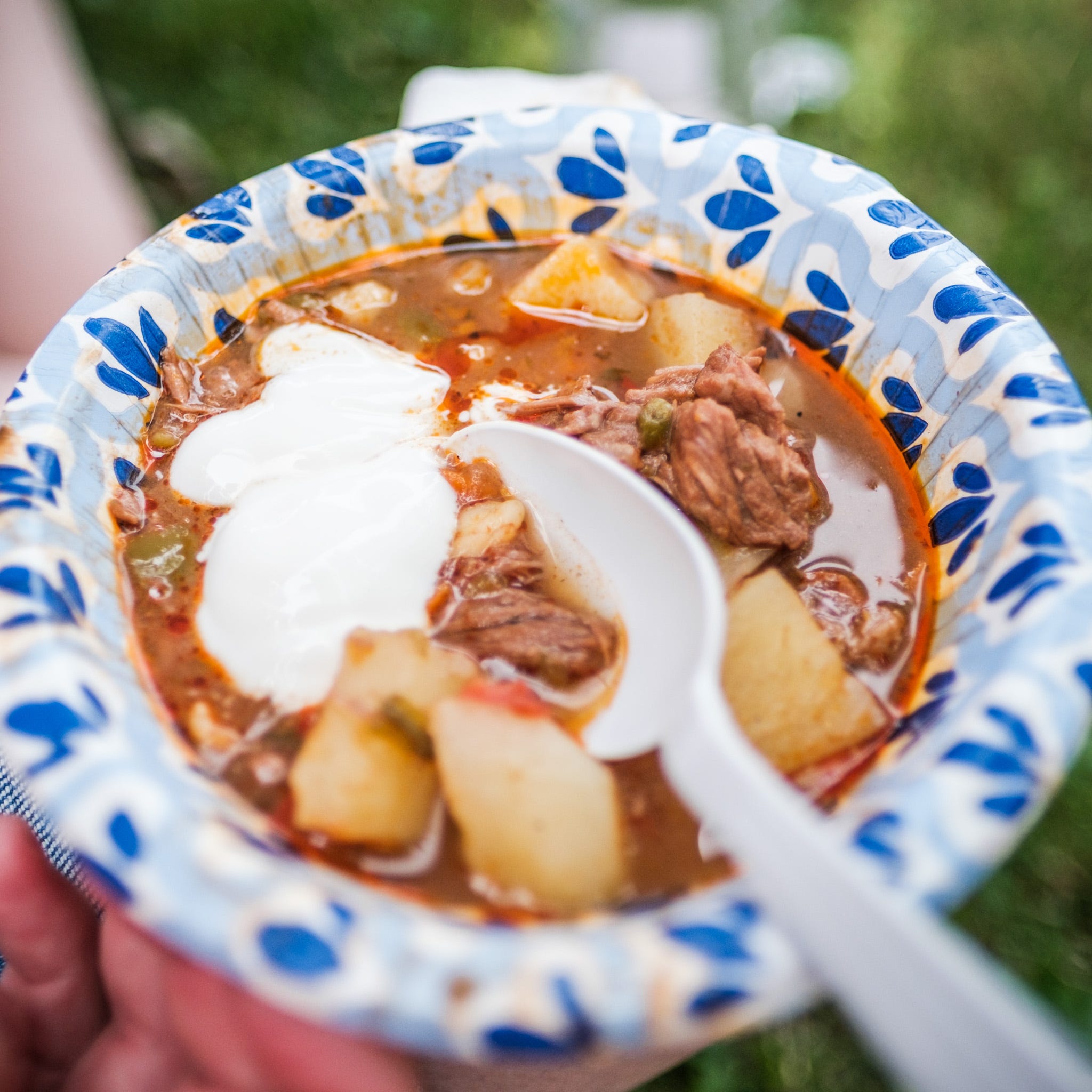
We started with the traditional gulyás, whose ingredient list included beef, smoked bones, onion, garlic, red, green and yellow peppers, parsley, celery, tomatoes and seasoning. I’ve been fortunate to sample some exceptional gulyás over the years, but this lard-soaked, smoke-kissed version, shot through with a hefty dose of paprika that left a pleasant burn, was by far the best I’ve ever had.
After polishing off the bowl rather quickly, we headed straight for the lángos, an ethereal fried bread I’ve longed for since I first sampled it at Paprikásh, a wonderful Hungarian restaurant in Chicago’s Cragin neighborhood that shuttered in 2005.
There they served it in fist-sized rounds, hot from the fryer and doused in garlic butter. The lángos at Gulyás Festival was nearly triple the size, filling a paper dinner plate.


We opted to experience it the “true Hungarian way,” according to Gábor (Gabe) Mozsi, president of the Hungarian Club of Chicago (who scoffed at the younger generation’s predilection for sweet toppings such as Nutella), which meant brushed with garlic butter but also smothered in sour cream and shredded cheese. The contrast between the feathery, piping-hot dough and the mound of cold dairy was sublime.
As I reminisced to BB about how the chewy, yeast dough resembled my favorite childhood carnival treat, pizze fritte, a middle-aged woman handed over a lángos piled with an avalanche of cream and cheese to an elderly matron parked in a wheelchair. The smile on her face as she closed her eyes and took her first bite suggested she was transported by her own taste memory.
BB and I lined up to try the Karcagi lamb gulyás, which Gábor heartily endorsed. This rugged stew was fork-tender, albeit way too gamey for my taste. Only after the fact did I learn that it likely contained offal such as liver, lungs, kidney, heart, spleen and tripe in addition to chunks of aged sheep.


During a self-imposed eating intermission, BB and I headed to the stage to witness the potato peeling contest (we had just missed the “Everyone loves lángos-eating competition!”). A short blonde woman who pulled the peeler back steadily in long strands shut out the others who opted for short and quick motions. The bilingual emcees humored the crowd and revealed the astonishing fact that this year’s volunteers peeled one thousand pounds of potatoes.


Though the festivities included folk dancing and musical performances, the event felt more like a low-key reunion with the Hungarian side of the family we’d never met than a typical Chicago street fest. Speaking with ebullient József (Józsi) Megyeri, he told us about growing up in an ethnic Hungarian village in present-day Serbia (then Yugoslavia), explaining that while there are nearly 10 million Hungarians inside present-day Hungary, 2 million ethnic Hungarians live in the surrounding countries that were once part of the Kingdom of Hungary. I suddenly understood why the Hungarian festival featured mititei (or mici) pork sausages from Romania.
BB and I wanted to end the day with a final gulyás. We passed over the vegetarian version (why bother?) and skipped the popular tripe stew (in spite of learning that last year all 400 portions were claimed in 12 minutes flat) and went back for one more bowl of the classic beef.
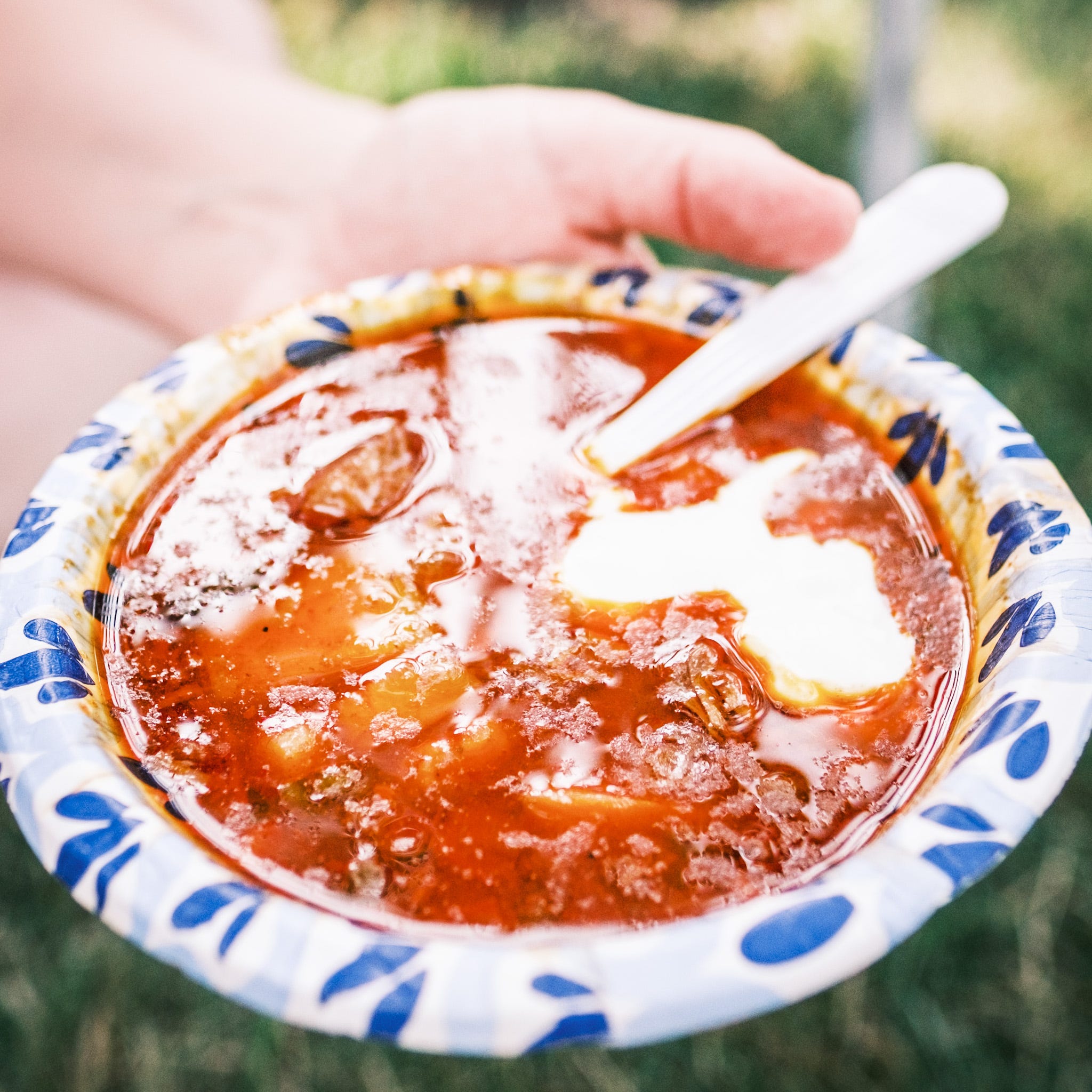
As I slurped the final drops of the luscious caraway and paprika-scented liquid that pooled in the bottom of the paper bowl, I wondered how the cooks coaxed so much flavor from such simple ingredients. Even on a hot and humid summer’s day, gulyás may be one of my favorite things to eat.
We grabbed a cinnamon sugar-coated chimney cake (kürtőskalács) for the road, though seeing as it was hot off the grill, we peeled off the top several layers the moment we got into our car.
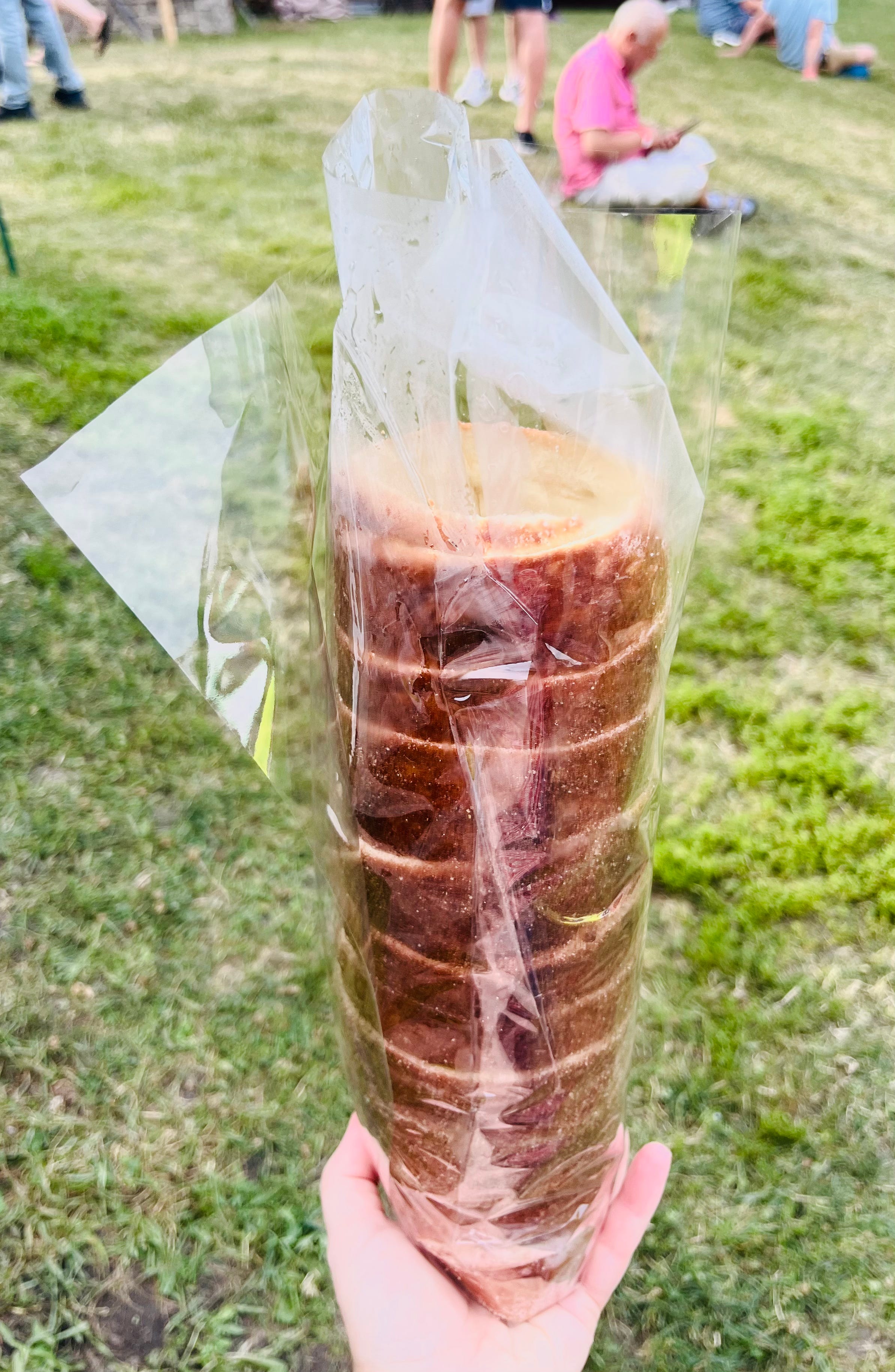
As we savored strands of buttery, glazed dough, lovingly prepared by volunteers delighting in their Hungarian heritage, we reflected on how fortunate we were to partake in this cultural and culinary immersion. Not only did we enjoy exceptional food, but we met some extraordinary ambassadors of their homeland’s traditions and experienced first-rate Hungarian hospitality.
Photos by Jared Wheeler - a special shout-out to Jared, who took these photos in spite of a recently-fractured wrist!
If you enjoyed this post, please forward it to someone who’d enjoy it, and tap the heart icon above or below. Thanks!
the gulyás looks so freaking good 🤌
That chimney cake sounds amazing!
Never let a fractured wrist keep you from enjoying a fun festival and amazing food.